Overview
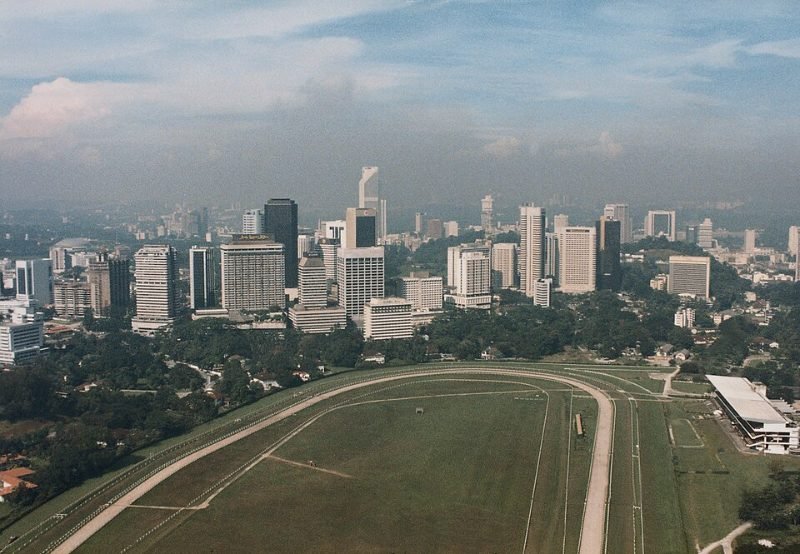
Understanding KLCC vs TRX helps tenants and businesses budget with confidence. When comparing KLCC vs TRX, always check whether figures are gross or net of service charges. Tracking KLCC vs TRX over time makes it easier to time a renewal or relocation. Benchmarking KLCC vs TRX across buildings keeps fit-out and headcount plans realistic. In short, KLCC vs TRX reward tenants who do their homework before signing.
This guide covers KLCC vs TRX: Which Submarket Should Your Company Lease In? in the context of the Greater Kuala Lumpur office market, providing practical analysis for corporate occupiers, business owners and advisors. The content reflects 2026 market conditions and current professional practice in Malaysia.
Quick Facts
- Topic: KLCC vs TRX: Which Submarket Should Your Company Lease In?
- Market Context: Greater KL, 2026
- Current Market: Tenant-favourable — prime vacancy ~22%, minimal new supply
KLCC vs TRX: Which Submarket Should Your Company Lease In?
Quick Answer: Choose KLCC for established prestige, the widest choice of buildings and price points, and proximity to the diplomatic and hospitality core. Choose TRX for the newest building stock, dual-line MRT interchange access, financial-district incentives and large floor plates. In 2026, TRX (the “New CBD”) carries KL’s highest submarket rents — averaging RM7.37 psf per month — while KLCC offers Grade A options across a much broader RM5.50–RM12.00+ band.
The KLCC vs TRX office leasing question now sits at the top of almost every corporate relocation brief we see in Kuala Lumpur. A decade ago there was no decision to make — KLCC was the premium market. Today, Tun Razak Exchange has matured into a genuine second core with its own MRT interchange, retail quarter, park and incentive framework, and the two precincts compete directly for the same MNC tenants. This guide compares them across the factors that actually decide leases: cost, building stock, connectivity, incentives, amenity and talent appeal.
The Two Precincts in One Table
Factor
| KLCC | TRX |
|---|---|
| Character | Mature mixed CBD around the Petronas Twin Towers and KLCC Park |
| Master-planned international financial district | Building stock |
| Wide range, 1990s icons to 2010s premium towers | Newest stock in KL, late-2010s onward |
| Indicative Grade A rents (2026) | RM5.50 – 12.00+ psf/month |
| RM7.50 – 13.00+ psf/month | Submarket benchmark |
| KL City average RM6.69–6.70 psf; prime average RM6.12 psf (Q1 2026) | New CBD average RM7.37 psf (4Q2025) — KL’s highest |
| Rail | KLCC LRT; Ampang Park LRT/MRT interchange on the fringe |
| TRX MRT interchange (Kajang + Putrajaya lines) on site | Floor plates |
| Mostly 10,000–25,000 sq ft | Up to ~34,000 sq ft |
| Incentive layer | Building-specific MD status in selected towers |
| MD status plus financial-district incentives | Amenity |
| Suria KLCC, KLCC Park, convention centre, 5-star hotel belt | The Exchange TRX mall, 10-acre rooftop park, growing hotel/F&B layer |
| Diplomatic proximity | Excellent (embassy row on Jalan Ampang) |
| Moderate | Cost: The Honest Comparison |
Headline rents flatter KLCC because its stock spans three decades of construction. Like-for-like, the gap narrows: a premium KLCC core tower and a TRX tower of similar vintage and specification price within touching distance of each other. The real cost difference emerges in two places.
Choice of price point. KLCC lets you buy the address at multiple budgets — a refurbished 1990s Grade A tower at RM5.50–6.50 psf delivers the same postcode as a premium icon at twice that. TRX has no legacy stock; the entry price is the premium price.
Total occupancy cost. Newer TRX buildings tend to run more efficient mechanical systems (lower after-hours air-conditioning charges, better energy intensity for ESG reporting) and offer floor plates that reduce circulation waste for large headcounts. For a 300-person occupier, plate efficiency alone can offset 5–8% of the rent gap. Run the numbers with our total occupancy cost framework rather than comparing psf in isolation.
Market context favours tenants in both precincts: KL prime vacancy was 22.1% in Q1 2026 with a thin completion pipeline, so landlords on both sides of the comparison are negotiating — rent-free months, fitted packages and capped escalations are all on the table.
Connectivity: TRX’s Strongest Card, KLCC’s Quiet Depth
TRX’s dual-line MRT interchange is the single best rail connection any KL office district offers. Staff commuting from Kajang, Cheras, Sungai Buloh corridor or Putrajaya-line suburbs arrive without changing lines — a daily, tangible benefit that shows up in recruitment and retention. Road access via dedicated ramps to the MEX and SMART tunnel is equally deliberate.
KLCC counters with breadth rather than a single trump card: the KLCC LRT under Suria, the Ampang Park LRT/MRT interchange on the precinct’s northern edge, a dense covered-walkway network, and the practical reality that taxis, e-hailing and visiting clients all know exactly where it is. For organisations whose people arrive from everywhere — including overseas visitors shuttling between hotels and meetings — KLCC’s mature wayfinding and hotel adjacency still wins the visitor experience.
Verdict: commuter-heavy workforces tilt TRX; visitor-heavy businesses tilt KLCC.
Incentives: Where TRX Pulls Ahead for Qualifying Occupiers
Both precincts offer MD-status buildings, which matter for companies pursuing Malaysia Digital incentives (building list here). TRX adds a second layer: as a designated financial district, qualifying financial-sector occupiers have historically accessed district-specific incentives such as accelerated capital allowances and employment-related deductions. For a bank, insurer, asset manager or fintech that qualifies, the incentive mathematics can neutralise — sometimes reverse — TRX’s rent premium.
The caveat we give every client: incentives attach to your activities and approvals, not your address alone. Confirm eligibility with tax advisors before letting incentives decide the precinct. Our Principal Hub guide and regional HQ setup guide cover the qualifying frameworks.
Building Stock and Floor Plates
KLCC’s depth is unmatched: from the Petronas Twin Towers and Menara 3 Petronas to The Intermark, Menara Hap Seng, Naza Tower and dozens more, the precinct offers every size, vintage and price point — including small fitted suites that TRX largely lacks. If your requirement is under 5,000 sq ft, KLCC (or its Jalan Ampang corridor) almost always offers more practical options.
TRX’s stock is small in count but new in specification: Exchange 106 with KL’s largest plates, Menara IQ with its campus-style floors, and the district’s continuing build-out. Occupiers consolidating 200+ staff onto minimal floors will find TRX’s plates genuinely hard to replicate in KLCC.
Talent and Amenity
Both precincts clear the bar that matters to employees — rail access, food variety, after-work options — but with different flavours. KLCC offers the park, the convention ecosystem and two decades of accumulated F&B depth at every price. TRX offers newness: a curated mall, a landscaped rooftop park and the cachet of KL’s most modern district, with an amenity layer that is still filling in at the edges.
In recruitment terms, we observe near-parity for professional roles, with TRX gaining share among younger financial and tech talent and KLCC retaining an edge for client-facing seniority. Our piece on office amenities employees actually want digs into the survey data.
Decision Framework
Choose KLCC if: – You need options across budgets, sizes or fitted conditions – Clients, embassies, hotels and the convention circuit feature in weekly operations – Your requirement is under ~8,000 sq ft – Brand value attaches to the established address
Choose TRX if: – You qualify for financial-district or MD incentives – You’re consolidating large headcounts and plate efficiency drives the business case – Dual-line MRT access materially improves your workforce’s commute – Group standards demand the newest building specification and ESG performance
Plenty of occupiers split the difference: HQ functions in one precinct, scaled operations in the KL Fringe at RM5.70 psf submarket pricing — the hub-and-spoke model covered in our workplace strategy guide.
Building Facilities Considerations
When evaluating buildings in the Greater KL market, key facilities criteria include internet connectivity and power reliability, security and access control, end-of-trip facilities, F&B proximity, and parking provision. Grade A buildings generally meet high standards — building-level verification remains advisable before signing.
Key Insights
- Negotiability: Most lease financial terms in Malaysia are negotiable — market knowledge enables confident negotiation.
- Documentation: Every agreed term must be precisely documented in the tenancy agreement.
- Professional advice: Specialist advisors typically recover their fees through improved terms.
Common Pitfalls
- Accepting standard terms: Standard lease forms favour landlords — negotiate every significant commercial term.
- Inadequate review: All tenancy agreements should be reviewed by a qualified Malaysian commercial property lawyer.
- Timeline underestimation: Build 4–8 weeks for documentation into occupancy planning.
Who This Guide Is For
- Business owners and executives making office decisions for Malaysian operations
- Corporate real estate managers requiring current market context
- CFOs reviewing occupancy cost and lease financial implications
- Advisors preparing analysis for clients with Malaysia office requirements
For official market and investment context, see MITI and MIDA. For practical leasing steps, read our guide on how to rent office space in KLCC, which complements this overview of KLCC vs TRX.
Frequently Asked Questions
Is TRX more expensive than KLCC?On average, yes — the New CBD’s RM7.37 psf submarket average is KL’s highest. But like-for-like premium towers in both precincts price comparably; KLCC’s lower average reflects its older stock options.
Which has better public transport, KLCC or TRX?TRX, for commuters — its on-site MRT interchange serves two lines. KLCC offers broader overall access via LRT, the Ampang Park interchange and superior visitor familiarity.
Do both precincts have MD-status buildings?Yes. MD status is building-specific in both; TRX additionally carries financial-district incentives for qualifying occupiers.
Where do most MNC regional headquarters choose?Both, by profile: finance and large consolidations increasingly choose TRX; diversified MNCs, professional firms and smaller regional offices still predominantly choose KLCC.
Can I negotiate rents in either precinct in 2026?Yes. With prime vacancy at 22.1% and minimal new supply, landlords in both precincts are offering rent-free periods, fitted packages and capped escalations to quality tenants.
Running the Decision Properly: A Worked Framework
The KLCC-versus-TRX call goes wrong when it’s made on postcode sentiment. Here’s the sequence we run with relocating MNCs.
Step 1 — Quantify the incentive delta. If your activities qualify for TRX financial-district incentives or depend on MD status, have tax advisors model the package value per year. For qualifying financial occupiers this single line item frequently exceeds the entire rent difference between precincts; for non-qualifying occupiers it’s zero and KLCC’s broader stock usually wins on economics.
Step 2 — Model total occupancy cost, not psf. Build a five-year model per shortlisted building: effective rent after incentives, service charge, parking, after-hours air-conditioning, fit-out amortisation and efficiency-adjusted usable area. A RM7.80 TRX floor at 88% efficiency can cost less per workstation than a RM6.90 KLCC floor at 78%.
Step 3 — Map the workforce. Plot staff postcodes against the rail network. A workforce clustered along the Kajang and Putrajaya MRT corridors gains real commute minutes at TRX; a Kelana Jaya Line-weighted workforce favours KLCC and Ampang Park. Commute deterioration is the most common hidden cost of precinct moves — and the most resented.
Step 4 — Weigh the visitor economy. Count your monthly external meetings, hotel-staying visitors and event attendances. High visitor intensity favours KLCC’s hotel-and-convention ecosystem; low intensity neutralises it.
Step 5 — Pressure-test both shortlists in negotiation. Solicit proposals from your best option in each precinct and let landlords compete across the divide. In a 22.1% vacancy market, cross-precinct competition is the tenant’s strongest lever — landlords know exactly who else you’re talking to, and the proposals improve when the alternative is credible.
Outlook: How the Two Precincts Diverge Through 2027
Near-zero new supply (0.12 million sq ft completing citywide in 2026, 0.27 million in 2027) supports rents in both precincts, but the composition differs. TRX’s premium tier rides the flight-to-quality current with strengthening pricing power as the district’s residential, hotel and retail layers complete. KLCC’s premium towers track the same trend, while its older Grade A stock — pressured by Budget 2026’s adaptive-reuse incentives and tenant upgrades — becomes the negotiable end of the market, widening the value spread within the precinct.
Translation for tenants: the premium-tier window of leverage is 2026 in both postcodes; the value window in KLCC’s refurbished older stock likely persists longer. Time your commitment to which segment you’re actually buying.
The Bottom Line
This is no longer a prestige contest — it’s a fit question. KLCC wins on choice, visitor experience and budget flexibility; TRX wins on specification, plates, commuter rail and incentives. Decide on your occupier profile, then negotiate hard: 2026’s market rewards tenants in both postcodes.
Shortlisting between KLCC and TRX? Enquire now and we’ll build a side-by-side of live options — rents, incentives and total occupancy cost — for your specific headcount.