Overview
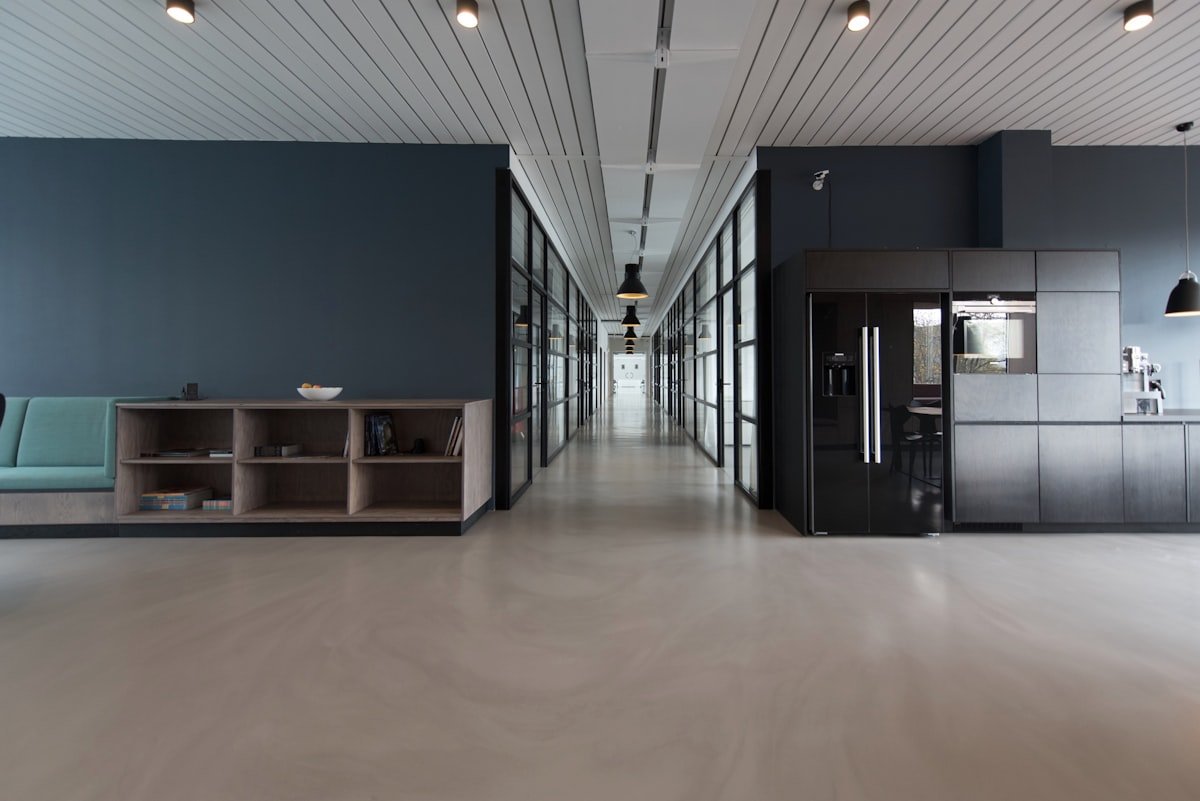
Understanding How Many Square Feet Per Employee helps tenants and businesses budget with confidence. When comparing How Many Square Feet Per Employee, always check whether figures are gross or net of service charges. Tracking How Many Square Feet Per Employee over time makes it easier to time a renewal or relocation. Benchmarking How Many Square Feet Per Employee across buildings keeps fit-out and headcount plans realistic. In short, How Many Square Feet Per Employee reward tenants who do their homework before signing.
This guide covers How Many Square Feet Per Employee? Malaysia Office Space Standards for 2026 in the context of the Greater Kuala Lumpur office market, providing practical analysis for corporate occupiers, business owners and advisors. The content reflects 2026 market conditions and current professional practice in Malaysia.
Quick Facts
- Topic: How Many Square Feet Per Employee? Malaysia Office Space Standards for 2026
- Market Context: Greater KL, 2026
- Current Market: Tenant-favourable — prime vacancy ~22%, minimal new supply
How Many Square Feet Per Employee? Malaysia Office Space Standards for 2026
Quick Answer: The Malaysian market’s working standards in 2026: 80–100 usable sq ft per person for dense operations (GBS, contact centres), 100–130 for standard corporate offices, 130–180 for professional firms with cellular layouts, and 180+ for client-floor-heavy or partner-rich profiles — measured in usable area, which matters because leases quote lettable area including a 10–18% efficiency loss. The hybrid-era twist: the right divisor is no longer headcount but planned peak attendance, which cuts requirements 15–35% for genuinely hybrid teams. This guide gives the standards, the measurement traps and the sizing worksheet.
Every office search begins with one number — how much space do we actually need? — and most get it wrong in one of two reliable directions: the headcount multiplied by a folk standard nobody can source (too much space, leased for years), or the optimistic hybrid assumption untested against a real Monday (too little, discovered immediately). The square feet per employee question for a Malaysian office has precise, current answers — they just come with conditions attached: whose square feet (usable or lettable), which employees (headcount or attendance), and what work style the layout serves. Here’s the full sizing toolkit.
The Standards Table: 2026 Working Numbers
Profile
| Usable Sq Ft / Person | The Layout It Assumes |
|---|---|
| High-density operations (GBS, contact centres, processing) | 80–100 |
| Benched workstations, minimal cellularisation, strong shared-amenity ratio | Standard corporate (the market’s centre) |
| 100–130 | Open plan + meeting suite + pantry + a few offices |
| Tech/engineering hubs | 90–110 |
| Dense desks, heavy collaboration-room weighting | Professional firms, cellular (law, boutique advisory) |
| 130–180 | Individual offices, library/files legacy, client suite |
| Client-floor-heavy (wealth, family office) | 180+ |
| Generous meeting floors, privacy architecture | Consulting/hoteling models |
| 60–85 per employed head | 0.5–0.7 desk ratios — the attendance divisor in action |
| Two calibration notes. First, these are usable figures — the area inside your demise that furniture actually occupies. Second, they’re all-in per-person numbers: each already amortises the meeting rooms, pantry, reception and circulation across heads, which is why a 100 sq ft standard doesn’t mean a 100 sq ft desk (the workstation itself runs 35–50; the rest is the shared layer every office needs). |
The Measurement Trap: Usable vs Lettable
The market’s quietest sizing error: leases quote and charge on net lettable area (NLA), which includes a share of elements you can’t furnish — and the gap between lettable and usable (the building’s efficiency ratio) runs roughly 82–90% across KL stock, varying with floor-plate shape, core design and column logic. The consequence in ringgit: a tenant needing 10,000 usable sq ft must lease ~11,100 in an efficient (90%) building but ~12,200 in an inefficient (82%) one — an 1,100 sq ft, RM85,000-a-year difference between two buildings whose psf rents looked identical. The disciplines: size your requirement in usable terms, demand each shortlisted building’s efficiency ratio (and test it — overlay your layout on the actual floor plate; odd shapes and column grids eat paper efficiency), and run rent comparisons on a cost-per-usable-foot basis, which is the only honest one. The TOC model bakes this in for exactly this reason.
The Hybrid Divisor: Attendance, Not Headcount
The structural change the 2026 standards must carry: for genuinely hybrid organisations, the divisor is planned peak attendance, not employed headcount. The method, condensed from the hybrid planning guide: measure real attendance (badge or booking data, not policy aspiration) across a representative quarter; take a high percentile of the daily peak (the 85th–95th, depending on your tolerance for occasional squeeze) plus a buffer for the all-hands and intake events; apply the profile standard to that population, with desk-sharing ratios (1.2–1.6 people per desk for typical 3-day patterns) doing the conversion. The honest yields: genuinely hybrid corporates are landing 15–35% below their headcount-based requirement — savings that fund the collaboration-and-amenity upgrade the same hybrid pattern demands — while the cautionary file fills with teams that sized to the policy’s theory and met Monday’s practice. Measure first; the badge data is the truth.
The Sizing Worksheet: Six Steps to a Defensible Number
1. The population: committed 12-month headcount ramp (the funded plan), converted to peak attendance if hybrid (percentile + buffer).
2. The profile standard: pick your row from the table; adjust for known deviations (the unusually meeting-heavy culture, the equipment-room load).
3. The special spaces, added explicitly: anything the standard’s shared layer doesn’t cover — the client floor, the lab, the training room, the night-zone — measured from real requirements, not vibes.
4. The growth treatment: committed growth inside the number; the dream in options and flex, never in leased emptiness.
5. The usable→lettable conversion: divide by each candidate building’s efficiency ratio for the area you’d actually lease there.
6. The layout test: before signing, your designer overlays the plan on the actual plate — the hour that catches the column grid, the inefficient core run, the pantry plumbing that forces a re-stack. Numbers approve budgets; layouts approve buildings.
A Worked Sizing: The 140-Person Corporate, Done Both Ways
A composite regional services tenant, 140 employed heads, settled 3-day hybrid pattern, standard corporate profile. The naive sizing: 140 × 115 usable = 16,100 usable → ~18,300 lettable at 88% efficiency — the number the first internal memo carried. The measured sizing: badge data showed a 91st-percentile daily peak of 96 attendees; planning population set at 105 (peak + all-hands buffer); 105 × 115 = 12,075 usable, plus an explicitly-added 900 sq ft client/training suite = ~12,975 usable → ~14,750 lettable — 3,550 sq ft (19%) below the naive figure, worth ≈RM275,000 a year at RM6.45. The reinvestment decision that followed the savings: a third of the recaptured budget into the meeting-and-social layer the attendance pattern actually loads, the rest banked. The layout test’s contribution: of the two finalist buildings (identical paper efficiency), one’s plate took the plan cleanly and one’s column grid forced a 6% area penalty — the difference invisible in every spreadsheet and decisive in the final hour. Sizing, done properly, is measurement plus geometry; the folk standard was never either.
The Special-Space Library: Sizing the Rooms the Standard Doesn’t Cover
Since step three of the worksheet keeps tripping first-timers, the sizing library for the common additions — usable square feet, KL practice:
Meeting rooms: 4-person huddle 80–120; 8-person standard 150–200; 12–14-person boardroom 280–400 (add presentation depth for the client-floor versions). The provisioning ratio for hybrid-era corporates: one room per 10–14 planning heads, weighted toward small rooms — the over-booking complaints all live at the 2–6 person end.
Focus rooms and booths: 25–45 each — small, numerous, and the line every plan under-provisions (the ABW ratios: 6–12 per 100 heads combined).
Reception and waiting: 150–400 by client-traffic profile; the visitor-heavy operations size from real daily counts, not vibes.
Pantry/café: 15–25 per planning head for the social-core version the era expects — double the legacy “kitchenette” allowance, deliberately.
Server/comms room: 80–150 for a standard corporate floor; the engineering profiles add equipment-room lines from their own kit lists, with cooling implications flagged early.
Storage and files: 0.5–1.5 per head in the digital era — and falling; challenge any legacy figure above it, because file rooms are where dead requirements hide.
Training/town-hall capacity: the honest question is frequency — the monthly all-hands rents a venue or borrows the café (designed convertible); the weekly training operation builds the room (25–35 per seat, flat floor).
The library’s meta-rule: every special space enters the worksheet with a utilisation justification attached — the room booked twice a month is a venue rental wearing capex — and the additions audit at year one against the booking data like everything else. Requirements grow one unexamined room at a time; the library, used with the question “how often, really?”, is how they don’t.
Building Facilities Considerations
When evaluating buildings in the Greater KL market, key facilities criteria include: internet connectivity and power reliability, security and access control, end-of-trip facilities, F&B proximity, and parking provision. Grade A buildings generally meet high standards — building-level verification remains advisable before signing.
Key Insights
- Tenant-favourable 2026: Best negotiating conditions for Grade A space in a decade.
- Flight-to-quality economics: Grade B-to-A upgrade economics are narrower than historical norms.
- Window closing: Incentive availability expected to reduce as vacancy tightens toward 2027.
Limitations and Caveats
- Data variability: Market benchmarks are averages — specific situations vary.
- Timing: KL market conditions evolve — verify current data before final decisions.
- Holistic evaluation: Use multiple data points — no single metric captures the full picture.
Who This Guide Is For
- Business owners and executives making office decisions for Malaysian operations
- Corporate real estate managers requiring current market context
- CFOs reviewing occupancy cost and lease financial implications
- Advisors preparing analysis for clients with Malaysia office requirements
For official market and investment context, see MITI and MIDA. For practical leasing steps, read our guide on how to rent office space in KLCC, which complements this overview of How Many Square Feet Per Employee.
Frequently Asked Questions
How many square feet per employee for an office in Malaysia?80–100 usable sq ft for dense operations, 100–130 for standard corporate offices, 130–180 for cellular professional firms — measured in usable area, with hybrid organisations applying the standard to peak attendance rather than headcount.
What’s the difference between usable and lettable area?Leases charge on net lettable area, which exceeds the space you can furnish by the building’s efficiency loss (typically 10–18%). Size requirements in usable terms and convert per building — and compare rents per usable foot.
How does hybrid work change space requirements?The divisor becomes planned peak attendance (a high percentile of measured daily peaks plus buffer), with desk-sharing ratios of 1.2–1.6 converting people to positions — yielding 15–35% reductions for genuinely hybrid teams.
How much space does a 50-person office need?At the standard corporate profile: roughly 5,000–6,500 usable sq ft (5,700–7,600 lettable depending on building efficiency) — adjusted down for hybrid attendance, up for cellular layouts or client floors.
Should I size for current headcount or growth?Lease the committed 12-month plan; secure growth through expansion options, ROFRs and serviced overflow rather than leased empty desks — the structure that prices uncertainty instead of paying rent on it.
The Bottom Line
The space question has a real answer, and it’s built from four honest inputs: measured attendance, the profile standard, the special spaces named, and each building’s true efficiency. Run the worksheet, test the layout on the actual plate, and the number that emerges will survive both the CFO’s review and Monday morning — which is the entire definition of sized right.
Want your requirement sized properly — badge data to floor plate? Enquire now — the worksheet, the efficiency audit and the layout test are how every search we run begins.
Related Articles
- KL Office Market Outlook 2026
- Tenant’s Market: Incentives Landlords Are Offering
- Grade A vs Grade B Office Performance
- KLCC vs Bangsar South vs Mid Valley
- How to Choose an Office Location in KL
This article is part of our complete guide to Office Space for Rent in KLCC — explore the full hub for everything on pricing, buildings, leasing and more.