Overview
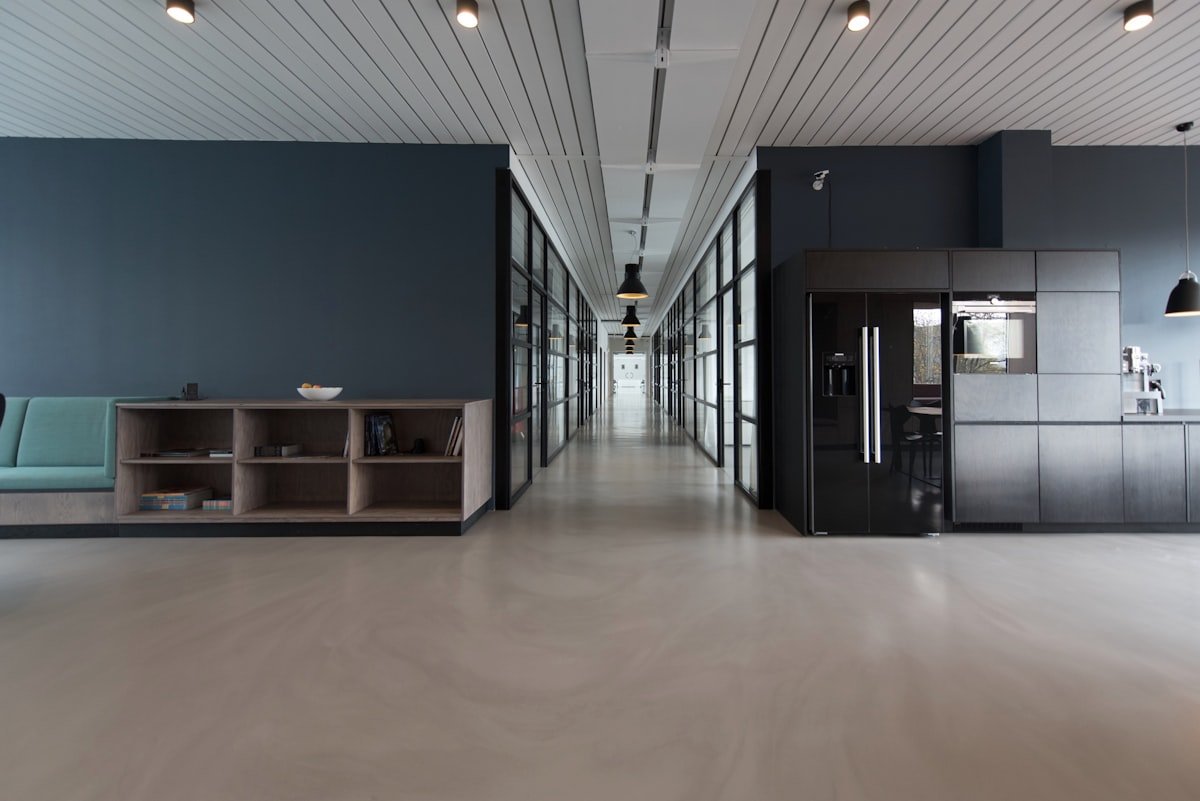
Understanding Hybrid Work Space Planning helps tenants and businesses budget with confidence. When comparing Hybrid Work Space Planning, always check whether figures are gross or net of service charges. Tracking Hybrid Work Space Planning over time makes it easier to time a renewal or relocation. Benchmarking Hybrid Work Space Planning across buildings keeps fit-out and headcount plans realistic. In short, Hybrid Work Space Planning reward tenants who do their homework before signing.
This guide covers Hybrid Work Space Planning: Right-Sizing Your KL Office in 2026 in the context of the Greater Kuala Lumpur office market, providing practical analysis for corporate occupiers, business owners and advisors. The content reflects 2026 market conditions and current professional practice in Malaysia.
Quick Facts
- Topic: Hybrid Work Space Planning: Right-Sizing Your KL Office in 2026
- Market Context: Greater KL, 2026
- Current Market: Tenant-favourable — prime vacancy ~22%, minimal new supply
Hybrid Work Space Planning: Right-Sizing Your KL Office in 2026
Quick Answer: Hybrid space planning in 2026 runs on three disciplines: measure real attendance (badge and booking data across a quarter — never the policy’s theory), plan to the peak percentile (the 85th–95th of daily peaks plus an events buffer, converted through desk-sharing ratios of 1.2–1.6 for typical 3-day patterns), and rebalance the mix (the saved desk area reinvested in the collaboration, social and focus spaces that chosen attendance actually loads). Done honestly, the method yields 15–35% smaller, measurably better offices; done on assumptions, it yields the Monday squeeze that discredits the whole programme. Here’s the full planning playbook, KL edition.
Five years into the hybrid era, the planning question has stopped being philosophical and become statistical — and KL’s offices are mid-correction in both directions: companies still carrying pre-2020 footprints at 40% utilisation, and early over-cutters squeezing full teams into Tuesday’s musical chairs. Hybrid work office space planning in Malaysia is, at this point, a solved method with unsolved adoption: the data exists in your access system, the math is mechanical, and the design template is proven across the consulting firms that pioneered it. What follows is the method end to end — measurement, sizing, the anchor-day problem that breaks naive averages, the design rebalance, and the lease structures that let the answer keep evolving.
Step One: Measure, Don’t Believe
The foundational discipline: policy is not attendance. The 3-day mandate produces measured patterns from 1.8 to 3.4 days depending on enforcement, culture and season — and every planning error downstream traces to skipping the measurement. The toolkit: badge/access data (the truth source — pull a representative quarter, excluding holiday distortions), booking-system data where hoteling already runs, and a short work-pattern survey for the forward-looking layer the historicals can’t see (the team that’s about to change model, the intake cohort arriving). The outputs that matter: the daily peak series (not the average — see below), the day-of-week shape (KL’s pattern, like everywhere’s, humps midweek: Tuesday–Thursday peaks routinely run 1.5–2× Monday/Friday), and the team-level patterns that drive zoning (the always-in operations pod, the client-facing floaters, the fully-remote exceptions).
Step Two: Size to the Peak, Not the Average
The arithmetic error that ruins hybrid offices: sizing to average attendance. An office averaging 55% attendance with Thursday peaks at 78% sized to the average is undersized three days a week — and the experienced version of the method goes straight to the peak series: take the 85th–95th percentile of daily peaks (your choice on the spectrum is a culture decision — how often may the office feel full?), add the events buffer (all-hands, training intakes, the quarter’s big days — either inside the percentile or as explicit overflow plans), and convert people to positions through the sharing ratio — for settled 3-day patterns, 1.2–1.6 people per desk, anchored teams lower, consulting-style benches higher. Then apply the per-person standards to the planning population, and the requirement emerges with an audit trail instead of a vibe.
The anchor-day problem deserves its own paragraph, because it’s where KL implementations actually strain: when every team anchors Tuesday–Thursday, the sharing math collapses on those days while Monday and Friday echo. The solutions, in rising order of intervention: spread anchor days deliberately across teams (the scheduling fix — costless, unpopular for a quarter, then invisible); price the percentile honestly and accept the midweek fullness as designed; or build the overflow valve (serviced day-passes and on-demand rooms for the genuine peaks). What fails is pretending: the plan that assumes flat attendance meets the real Tuesday within a fortnight.
Step Three: Rebalance the Mix — The Office’s New Job
The hybrid office’s purpose shifted from housing work to hosting gathering — people attend for the meetings, the collaboration sprints, the social fabric — and the floor plan must follow the purpose:
* Desks shrink as a share (the sharing ratio did that), and what remains splits into bookable hot positions, team-anchored neighbourhoods (zoning by team beats free-for-all for belonging and for the cohesion that downsizing threatens), and the locker-and-touchdown kit of a non-resident workforce.
* Collaboration grows absolutely, not just relatively: more team rooms, project spaces and writeable surfaces — because in-days concentrate exactly the activities that need rooms, and the meeting-room squeeze is the hybrid office’s most-reported failure.
* Focus space survives the cull: the open question hybrid planning keeps fumbling — people attend partly to escape home’s distractions, and the library zones and focus rooms earn their area in every post-occupancy survey.
* The social core earns real budget: the pantry-that’s-actually-a-café, the gathering stair, the space that makes the commute worth choosing — the amenity logic, applied inside your own demise.
* And the technology layer is load-bearing: booking systems that work, meeting rooms where the remote half genuinely participates, and the utilisation analytics that keep next year’s plan honest.
Step Four: Let the Lease Match the Uncertainty
Hybrid’s planning truth: the answer will move — patterns settle, mandates shift, the next intake changes the math — so the property structure should price the movement: shorter-but-renewable terms where the pattern is young; expansion options and ROFRs carrying the upside scenario; sublet-friendly paper carrying the downside; the serviced valve for peaks and pilots; and the fitted-space route for speed where the redesign accompanies a move. The 2026 market’s gift to all of it: 22.1% vacancy and a generous concession menu make the flexible structures cheap to paper this cycle.
A Worked Right-Sizing: 220 Heads, Measured Honestly
A composite regional corporate, 220 employed heads, official 3-day policy, approaching lease expiry in 21,000 lettable sq ft. The measurement quarter: badge data showed true attendance averaging 2.4 days; daily peaks humped at Wednesday; the 90th-percentile peak: 134 attendees; all-hands months spiked to 170 (flagged for overflow treatment, not steady-state sizing). The sizing: planning population 145 (percentile + buffer); sharing ratio 1.5 → 147 positions including anchors; standard at 112 usable/person on the planning population + an explicit 1,100 sq ft collaboration-suite addition = ~13,400 usable → ~15,200 lettable at the new building’s 88% efficiency — a 28% footprint cut. The rebalance inside it: meeting-room count up 40% from the old office, six focus rooms added, the social core tripled, team neighbourhoods zoned. The structure: three-year term with a renewal option, ROFR on the adjacent 4,000 sq ft (the upside), serviced day-pass arrangement two floors down (the all-hands valve), and the old space’s exit run through a surrender negotiation the fitted-hungry market made civilised. Year one’s report card: utilisation of the new positions at 76% (the healthy band), the Wednesday squeeze real but designed-for, attendance itself up 0.3 days — the office, made worth attending, being attended — and ≈RM480,000 a year of occupancy cost recycled, a third into the workplace itself and the rest to the P&L. The method’s whole promise, delivered in one move: smaller, better, and provably both.
The Policy-Design Interlock: When the Space Plan Should Talk Back
One under-discussed direction of influence: the space math doesn’t just serve the attendance policy — it should inform it. The planning exercise surfaces facts the policy conversation needs:
The anchor-day spread is a policy lever with a property price. If the measurement shows every team anchoring Tuesday–Thursday, the space plan can quantify the alternative: spreading anchors across the week flattens the peak percentile, cuts the planning population 8–15%, and prices in actual ringgit what the calendar habit costs. Leadership deciding between “everyone together midweek” and “RM200,000 a year” deserves to see both numbers — sometimes togetherness wins, legitimately, but it should win priced.
Mandate changes re-run the math. The 2-day policy drifting to 3, the new CEO’s 4-day instinct — each shifts the peak percentile materially, and the space plan should carry sensitivity bands (the requirement at 2.0/2.5/3.0 measured days) so the policy conversation sees its property consequences in advance rather than discovering them as a Tuesday crisis. The lease structures — options up, sublet paper down — are the sensitivity bands’ physical insurance.
And the attendance data is a two-way mirror. The same badge analytics that size the office reveal which teams’ in-days cluster around which activities — intelligence for the policy’s content (anchor days built around the collaboration the data shows, not the calendar’s habit) and for the workplace’s design (the settings loaded on real in-day behaviour). The companies running this loop — measure, size, design, re-measure — report the rare outcome of policy, space and behaviour actually agreeing; the ones running policy and property as separate conversations keep meeting in the corridor on a crowded Wednesday, surprised.
Building Facilities Considerations
When evaluating buildings in the Greater KL market, key facilities criteria include: internet connectivity and power reliability, security and access control, end-of-trip facilities, F&B proximity, and parking provision. Grade A buildings generally meet high standards — building-level verification remains advisable before signing.
Key Insights
- Tenant-favourable 2026: Best negotiating conditions for Grade A space in a decade.
- Flight-to-quality economics: Grade B-to-A upgrade economics are narrower than historical norms.
- Window closing: Incentive availability expected to reduce as vacancy tightens toward 2027.
Limitations and Caveats
- Data variability: Market benchmarks are averages — specific situations vary.
- Timing: KL market conditions evolve — verify current data before final decisions.
- Holistic evaluation: Use multiple data points — no single metric captures the full picture.
Who This Guide Is For
- Business owners and executives making office decisions for Malaysian operations
- Corporate real estate managers requiring current market context
- CFOs reviewing occupancy cost and lease financial implications
- Advisors preparing analysis for clients with Malaysia office requirements
For official market and investment context, see MITI and MIDA. For practical leasing steps, read our guide on how to rent office space in KLCC, which complements this overview of Hybrid Work Space Planning.
Frequently Asked Questions
How much can hybrid work reduce office space needs?Typically 15–35% for genuinely hybrid organisations — sizing to measured peak attendance (85th–95th percentile of daily peaks) with sharing ratios of 1.2–1.6, rather than to headcount.
What desk-to-employee ratio works for hybrid offices?For settled 3-day patterns, 1.2–1.6 people per desk — anchored operational teams toward 1.0–1.2, mobile and client-facing populations toward 1.6+ — always validated against your own badge data’s peaks.
How do I handle everyone coming in on the same days?The anchor-day problem: spread team anchor days by schedule, size honestly to the midweek percentile, and build an overflow valve (serviced passes, on-demand rooms) for genuine peaks. Averages lie; plan to the hump.
What should a hybrid office have more of?Meeting and collaboration rooms (the most-reported shortage), focus spaces, and a social core worth commuting for — funded by the desk area the sharing ratio released.
Should the lease change for hybrid uncertainty?Yes — shorter renewable terms, expansion options for the upside, sublet-friendly drafting for the downside, and serviced overflow for peaks: structures 2026’s market papers cheaply.
The Bottom Line
Hybrid planning is measurement, a percentile, a ratio and a rebalance — a method, not a debate — and KL’s badge readers already hold every number it needs. Size to the real peak, redesign for the gathering the office now exists to host, structure the lease for an answer that will keep moving, and collect the rare corporate prize the worked case banked: an office that got smaller and better in the same quarter.
Approaching an expiry with hybrid math to run? Enquire now — the measurement framework, the sizing model and the flexible-structure negotiation are one engagement.
Related Articles
- KL Office Market Outlook 2026
- Tenant’s Market: Incentives Landlords Are Offering
- Grade A vs Grade B Office Performance
- KLCC vs Bangsar South vs Mid Valley
- How to Choose an Office Location in KL
This article is part of our complete guide to Office Space for Rent in KLCC — explore the full hub for everything on pricing, buildings, leasing and more.