Overview
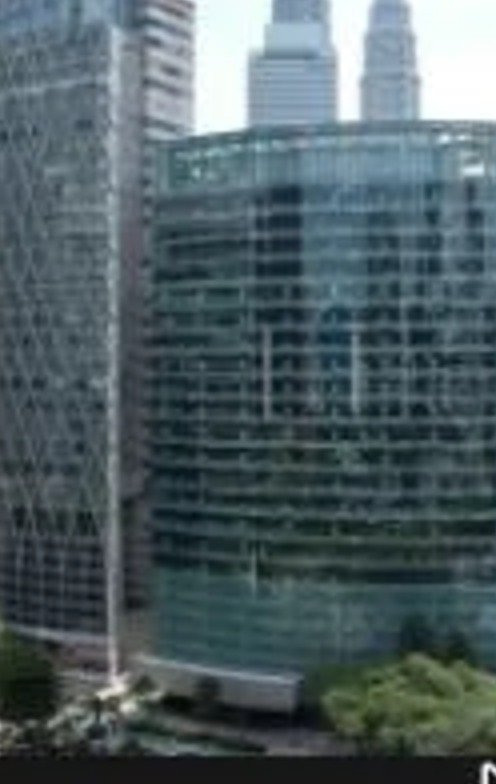
KLCC vs KL Fringe: Key Things to Know
Understanding KLCC vs KL Fringe helps tenants and businesses budget with confidence. When comparing KLCC vs KL Fringe, always check whether figures are gross or net of service charges. Tracking KLCC vs KL Fringe over time makes it easier to time a renewal or relocation. Benchmarking KLCC vs KL Fringe across buildings keeps fit-out and headcount plans realistic. In short, KLCC vs KL Fringe reward tenants who do their homework before signing.
This guide covers KLCC vs KL Fringe: Choosing the Right Office Location for Your Business in the context of the Greater Kuala Lumpur office market, providing practical analysis for corporate occupiers, business owners and advisors making real estate decisions. The content reflects 2026 market conditions and current professional practice in Malaysia.
Quick Facts
- Topic: KLCC vs KL Fringe: Choosing the Right Office Location for Your Business
- Market Context: Greater KL, 2026
- Applicable to: Corporate occupiers, business owners, SMEs and MNCs making office-related decisions in Malaysia
- Current Market Condition: Tenant-favourable — prime vacancy ~22%, minimal new supply in 2026
Introduction
It is one of the most common questions occupiers ask when evaluating office space in Greater Kuala Lumpur: should we be in the city centre, or is there a better case for the KL Fringe?
The honest answer is that it depends entirely on what your business actually needs — and in 2025, the gap in quality between KLCC and the best KL Fringe locations has narrowed to the point where the decision is rarely as obvious as it once was. Grade A green buildings exist in both markets. Strong rail connectivity exists in both. MD Status recognition exists in both. The meaningful differences lie in rental costs, tenant profile, talent geography, and what your specific address communicates to the people who matter most to your business.
This guide breaks down the comparison systematically so you can make the right call.
The Rental Gap Is Real — and Significant
Start with the numbers, because they matter enormously over the life of a lease.
Prime KLCC office rents sit at approximately RM7 per sq ft per month as of Q4 2025, according to Knight Frank Malaysia. Trophy buildings and newer towers within the KLCC and TRX corridor — Menara 3 Petronas, Exchange 106, Menara IQ — can command considerably more, with some sources citing RM9 to RM12 per sq ft for the very best space.
The KL Fringe average sits at RM5.83 per sq ft per month as of Q4 2025. Within the Fringe, there is meaningful variation: Bangsar South and Kerinchi command RM5.50 to RM6.00 per sq ft; Mid Valley City and KL Eco City run RM5.50 to RM6.50 per sq ft; Pantai and Bangsar run around RM5.07 per sq ft.
That rental gap — roughly 20% to 40% depending on where exactly you look — translates into significant cost differences over a five-year lease across a multi-floor tenancy. A company occupying 20,000 sq ft saves between RM288,000 and RM480,000 per year by choosing a comparable Fringe building over a prime KLCC address. Over five years, that is between RM1.44 million and RM2.4 million — before incentives, fit-out contributions, or rent-free periods that Fringe landlords typically offer more generously than KLCC landlords in a competitive leasing environment.
Occupancy Tells a Different Story in Each Market
Here is the more nuanced data point: despite KLCC’s premium rents, the KL Fringe is actually more fully occupied.
Knight Frank’s Q1 2025 data shows KL City at 68.7% occupancy versus KL Fringe at 89.2%. JLL’s Q2 2025 report placed the KL City vacancy rate at 19.2% — an improvement from 23.6% a year earlier, but still a market where tenants have genuine choice and leverage. The KL Fringe vacancy of 8.5% in the same JLL report tells a different story: well-located, quality Fringe buildings are heavily subscribed, and tenants in the best Fringe addresses do not always find the waiting easier than they would in KLCC.
Bangsar South and Kerinchi specifically recorded a 98.1% occupancy rate in Q3 2025 — the highest of any submarket in Greater KL. This matters for two reasons. First, it tells you that the demand for good KL Fringe space is genuine and sustained. Second, it means that if you want space in the best Bangsar South buildings, you cannot always negotiate from a position of strength — competition for the best floors exists.
Connectivity: KLCC Has Depth, KL Sentral Has Breadth
Both markets have strong public transport credentials, but the nature of connectivity differs.
KLCC is served by the KLCC LRT station on the Kelana Jaya Line, and pedestrian tunnels connect it to the surrounding commercial buildings. The Ampang Park MRT station on the Putrajaya Line added a new transit node to the KLCC precinct. For employees commuting from Ampang, Cheras, Puchong, and Subang Jaya, the rail network reaches KLCC reasonably well.
KL Sentral — which straddles the KLCC and KL Fringe distinction — is Malaysia’s most transit-connected commercial address. It integrates KTM Intercity, KTM Commuter, ERL, LRT, KL Monorail, and MRT lines within walking distance of each other, making it genuinely accessible for employees commuting from almost anywhere in the Klang Valley. Buildings like Q Sentral, NU Tower, Platinum Sentral, and Menara 1 Sentrum benefit from this unmatched connectivity premium.
Bangsar South is served by the Kerinchi LRT station and Universiti LRT station on the Kelana Jaya Line, with bus connections bridging the gap. It is not as directly rail-connected as KLCC or KL Sentral, but the existing connectivity is adequate for most occupiers — and the highway access via the Kerinchi Link and Federal Highway is excellent.
Tenant Profile: Who Is Where, and Why
The occupier mix in each submarket reflects different business needs — and understanding who your neighbours will be matters for client perception, talent attraction, and ecosystem access.
KLCC and TRX house the densest concentration of financial institutions, international law firms, major professional services partnerships, and MNC regional headquarters in Malaysia. HSBC, Standard Chartered, Affin Bank, ANT International, and JLL Malaysia are among the names now anchored in the TRX precinct. For businesses whose primary clients are banks, fund managers, and large corporations — and for whom being physically proximate to those clients is a daily operational reality — KLCC and TRX remain unmatched.
Bangsar South and KL Sentral attract a broader mix of technology companies, global business services operations, oil and gas firms, shared services centres, and healthcare and pharmaceutical businesses. Tencent opened its regional hub at Menara 1 Sentrum, KL Sentral in Q4 2025. The Bangsar South precinct hosts a roster of large technology and professional services MNCs who chose it precisely because it offered KLCC-quality buildings at a KL Fringe price point.
Mid Valley City and KL Eco City attract companies that value the lifestyle amenity of being adjacent to Mid Valley Megamall and Gardens Mall — a practical benefit when your employees need to manage their daily lives efficiently without leaving the precinct. KL Eco City’s GBI-certified towers have been popular with companies combining a retail or consumer-facing dimension with a corporate office presence.
ESG Credentials: Both Markets Are Catching Up
Green certification was once a differentiator that KLCC and TRX buildings held over the Fringe. That gap has narrowed significantly.
Exchange 106 at TRX holds LEED Platinum and GBI Gold — the highest green credentials available in Malaysia. Menara IQ holds LEED Gold and GBI. Several KLCC-corridor towers carry GBI certification. But the Fringe is not far behind: KL Eco City’s towers are GBI-certified, Bangsar South’s newer buildings carry GBI and BCA Green Mark credentials, and the new supply pipeline shows that 77% of buildings currently under construction across the Klang Valley are expected to be green-certified, according to CBRE/WTW data.
For occupiers whose ESG reporting requirements mandate a green-certified building, the good news is that you are no longer forced to pay a KLCC premium to tick that box. You can find LEED or GBI-certified space in Bangsar South, KL Eco City, and even KL Sentral at a meaningful discount to comparable KLCC space.
The MD Status Question
Under the current Malaysia Digital framework, the formal location requirement for MD Status was removed in March 2022. Both KLCC and the KL Fringe are broadly recognised under the MDLR framework — KLCC as an MD Nexus (financial district category) and Bangsar South as an MD Nexus (GBS and fintech category).
For technology companies specifically evaluating MD Status compliance in their office decision, the practical message is that your choice between KLCC and the KL Fringe is no longer constrained by incentive geography. The decision should be driven by business fundamentals, not by a desire to maintain a specific status designation.
How to Make the Decision
The right framework for choosing between KLCC and the KL Fringe is a simple set of questions:
- Who are your primary clients and counterparties? If they are concentrated in KLCC and TRX, proximity matters. If they are distributed across Greater KL or reached primarily digitally, it matters less.
- Where does your talent live? If your core hiring pool commutes from Subang Jaya, Petaling Jaya, or Bangsar, a KLCC office may impose unnecessary travel friction. If your workforce includes a high proportion of expatriates living in KLCC-adjacent condos, a city centre address may reduce daily commute time.
- What is your brand signal requirement? For financial services, law firms, and MNC headquarters, a KLCC address carries reputational weight with clients and prospective senior hires that is difficult to replicate. For technology companies, product quality matters more than postcode.
- What is your realistic five-year occupancy cost budget? Run the numbers honestly, including fit-out capex, rent-free periods, and service charges, not just headline rent per square foot.
For official market and investment context, see MITI and MIDA. For practical leasing steps, read our guide on how to rent office space in KLCC, which complements this overview of KLCC vs KL Fringe.
FAQ
Is KLCC or KL Fringe better for a technology company?
Most technology companies find KL Fringe locations — particularly Bangsar South, KL Eco City, KL Sentral, and the PJ corridor — offer a better value proposition. Lower rents, proximity to the technology talent pool, and MD-recognised buildings combine to make Fringe locations more operationally efficient for companies whose revenue driver is product quality rather than address prestige.
Which KL Fringe location has the best rail connectivity?
KL Sentral is the most transit-connected commercial address in Greater KL, integrating six rail lines within walking distance. Bangsar South is served by the Kerinchi and Universiti LRT stations. Mid Valley City and KL Eco City are adjacent to KTM Commuter and LRT stations.
What is the average rent in Bangsar South compared to KLCC?
Bangsar South and Kerinchi averaged approximately RM5.70 per sq ft per month in Q1 2025, versus prime KLCC rents of approximately RM7 per sq ft per month — a gap of roughly 19%.
Building Facilities Considerations
When evaluating buildings in the Greater KL market, the facilities criteria most consistently relevant to occupiers include: internet connectivity and power reliability, security and access control, end-of-trip facilities (showers, lockers, bicycle storage), F&B proximity, and parking provision. Grade A buildings generally meet high standards across these criteria — building-level verification remains advisable before signing.
Key Insights
- Current conditions: 2026’s tenant-favourable market creates the best negotiating conditions in a decade for Grade A space.
- Practical application: Apply the analysis in this guide alongside specific building and landlord due diligence.
- Market evolution: Conditions are expected to tighten into 2027 — occupiers with 2026 lease events have the strongest current leverage.
Limitations and Caveats
- Data variability: Market benchmarks represent averages — specific buildings and transactions may vary significantly.
- Timing sensitivity: KL market conditions evolve — verify current data before final decisions.
- Multiple factors: No single metric captures the full picture — holistic evaluation across multiple factors produces better outcomes.
Who This Guide Is For
- Business owners and executives making office decisions for Malaysian operations
- Corporate real estate managers requiring current market context
- CFOs and finance directors reviewing occupancy cost and lease financial implications
- Advisors preparing analysis for clients with Malaysia office requirements