Building Overview
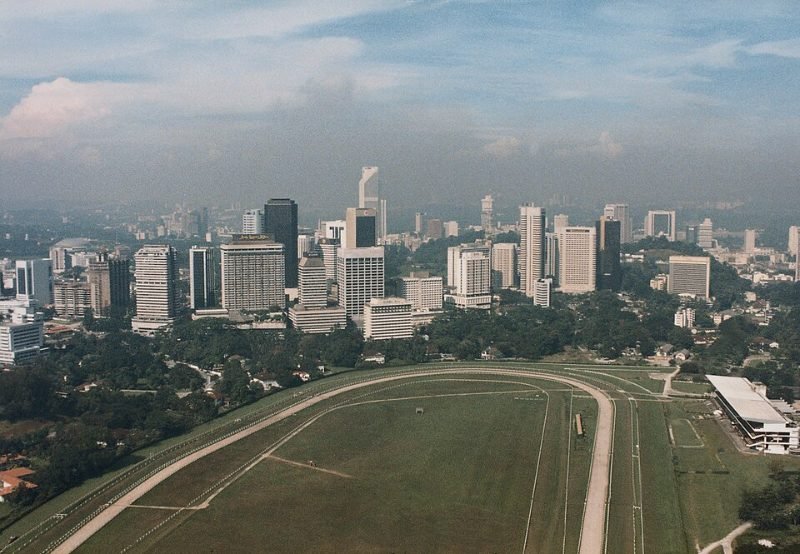
Understanding Pavilion Damansara Heights helps tenants and businesses budget with confidence. When comparing Pavilion Damansara Heights, always check whether figures are gross or net of service charges. Tracking Pavilion Damansara Heights over time makes it easier to time a renewal or relocation. Benchmarking Pavilion Damansara Heights across buildings keeps fit-out and headcount plans realistic. In short, Pavilion Damansara Heights reward tenants who do their homework before signing.
Pavilion Damansara Heights is a premium Grade A mixed-use development in Damansara Heights — one of Kuala Lumpur’s most exclusive residential and increasingly significant office addresses. Developed by Urusharta Jamaah and Pavilion Group, the development integrates two office towers (Tower A and Tower B) with a luxury retail mall and residential component, positioned at the intersection of Jalan Damansara and Sekyen 1, Damansara Heights.
The development represents the latest generation of “lifestyle office” development in KL — where premium retail, F&B and residential amenities are integrated directly with Grade A office towers to create a self-contained urban neighbourhood. For occupiers, this means access to one of KL’s most curated retail and F&B environments within the building complex, combined with a prestigious Damansara Heights postcode that carries strong address recognition among KL’s business community.
Quick Facts
- Development: Pavilion Damansara Heights
- Address: Damansara Heights, Kuala Lumpur
- Developer: Urusharta Jamaah / Pavilion Group
- Building Grade: Grade A (Premium)
- Key Office Towers: Tower A, Tower B
- Rail Access: Nearest LRT/MRT — Semantan MRT (Putrajaya Line) approximately 10–15 min walk or short drive
- Retail: Pavilion Damansara Heights Mall (integrated)
- Typical Rental Range: RM 7.00 – RM 10.00 psf/month (2026, subject to market conditions)
- Best For: MNCs, professional services, private equity, family offices, organisations seeking premium non-KLCC address
Pavilion Damansara Heights: The Corporate Towers That Brought Premium Offices to KL’s Poshest Postcode
Quick Answer: Pavilion Damansara Heights is an integrated development of corporate towers, luxury residences and a retail podium, sitting directly on the Pusat Bandar Damansara MRT station in KL’s most prestigious residential suburb. Its new-generation office towers ask roughly RM6.00–8.00 psf per month in 2026 — premium pricing for a submarket whose older stock averages RM4.62 psf — and compete for tenants who want city-grade specification without the city.
For decades, Damansara Heights had a paradox: Kuala Lumpur’s most exclusive suburb — the leafy hillside where the establishment actually lives — offered almost nothing in the way of modern offices. Companies whose partners and directors woke up in Damansara Heights commuted past their own neighbourhood to work in towers half an hour east. Pavilion Damansara Heights office rental exists to close that loop: a cluster of new corporate towers, integrated with luxury retail and residences, planted directly on top of an MRT station in the postcode that never needed marketing.
Whether it closes the loop for you depends on a calculation this guide will walk through honestly.
The Development at a Glance
Pavilion Damansara Heights is a large-scale integrated project bringing the Pavilion brand’s retail-and-residences formula — familiar from Bukit Bintang — to the suburb, wrapped around a substantial corporate office component delivered in phases through the mid-2020s.
Attribute
| Detail | Location |
|---|---|
| Pusat Bandar Damansara, Damansara Heights — KL’s premier residential suburb | Composition |
| Multiple corporate towers, luxury residences, Pavilion-branded retail podium | Specification |
| New-generation Grade A: efficient plates, modern M&E, premium lobbies | Rail |
| Pusat Bandar Damansara MRT (Kajang Line) — direct station integration | Submarket context |
| Damansara Heights older stock averages RM4.62 psf; PDH towers price well above | Road access |
| Jalan Semantan / SPRINT highway corridor, Jalan Damansara connections | Tenant DNA (emerging) |
| Family offices, wealth managers, professional firms, regional offices led from the suburb | The MRT integration deserves emphasis because it transformed the suburb’s office case overnight. Damansara Heights was historically a drive-only district; the Kajang Line put it twelve-ish minutes from the city centre’s southern stations and connected it to a Valley-wide catchment. The development sits on the station — not near it, on it — which is the same trump card that built TRX’s commuter story. |
What Pavilion Damansara Heights Costs in 2026
Segment
| Indicative Asking Range (RM psf/month) | PDH corporate towers, standard floors |
|---|---|
| 6.00 – 7.00 | Premium floors / fitted options |
| 6.80 – 8.00 | Older Damansara Heights stock (context) |
| 4.00 – 5.00 | Read those bands against two reference points. First, the suburb itself: PDH asks a 40–60% premium over the surrounding older stock — the full new-build, MRT-integrated, Pavilion-branded markup. Second, the city: PDH’s range lands at or below the KLCC core’s premium towers (RM7.00–12.00+) and below the New CBD’s RM7.37 average, while delivering comparable specification. That’s the development’s pitch in one sentence: city-premium product at sub-city pricing, in the suburb your decision-makers may already live in. |
The 2026 leasing climate adds tenant leverage of a specific kind: a multi-tower development in lease-up, in a market with 22.1% prime vacancy, competes hard for anchor and early tenants. Rent-free periods, fitted packages, naming and signage conversations for meaningful commitments, expansion options across phases — all are live topics. Early tenants in phased developments historically secure the terms later tenants envy; the TRX precedent applies here at suburb scale.
The Case For — and the Honest Case Against
For:
The decision-maker’s commute collapses to minutes. It sounds parochial until you watch it decide leases: when the founders, senior partners or regional MD live in Damansara Heights, Bangsar or Kenny Hills — as a remarkable share of KL’s corporate leadership does — a premium office five minutes from home beats a prestigious one forty minutes away with surprising frequency. Family offices and partner-led firms feel this hardest, and they’re exactly who’s leasing here.
MRT integration solves the staff question. The historical objection to suburb offices — “fine for the boss, miserable for everyone else” — dissolves when the office sits on a trunk-line station. Staff commute by rail from across the Valley; the boss walks downhill.
The integrated formula works. Pavilion-branded retail, F&B and residences within the development mean the daily-life layer arrives with the towers rather than decades after, sparing early tenants the pioneer hardship that new districts usually impose.
Against:
The client gravity is still eastward. Banks, embassies, government, the convention circuit — the institutional meeting economy lives in the city centre and TRX. Tenants whose week is built on hosting institutional visitors will feel the distance, and should weigh it honestly against the commute gains.
The submarket is young at this price point. PDH is establishing a premium tier in a suburb that never had one; comparables are thin, and the towers’ long-term pricing power is a thesis, not yet a track record.
Phased delivery means a living construction environment for early years — manageable, standard for the product type, but worth walking the site to calibrate.
What Early Tenants and the Suburb Are Telling Us
The development is young, so we’ll report early signals rather than year-one verdicts. The clearest: demand is led from the suburb itself, exactly as the thesis predicted — wealth managers, family offices, boutique advisory firms and professional practices whose principals live within ten minutes. Several have described the move in identical terms: they stopped commuting to prestige and brought a sufficient version of it home.
Staff feedback in early tenancies centres on the MRT (positive, and decisive for non-suburb-resident employees) and on the retail layer’s progressive opening — each new F&B tranche measurably improves the lunch map, the familiar rhythm of integrated developments in lease-up. Visiting-client reactions skew pleasantly surprised: the Pavilion-grade arrival experience reads as premium without explanation, and Damansara Heights needs no introduction to any Malaysian counterpart.
The watch-item early tenants flag: evening road traffic on the Semantan corridor, the suburb’s long-standing pinch point. The MRT is the answer for staff; for the drive-home demographic the development was partly built for, it’s a known local condition they’ve usually lived with for years anyway.
Practical Notes for a PDH Tenancy
1. Negotiate as an early-phase tenant deliberately. Lease-up developments price for momentum; bring competing options (city and suburb) and convert your timing into terms — then cap the renewal, because the discount era won’t repeat.
2. Match your tower and floor to your visitor profile. Multi-tower developments vary internally on arrival experience and adjacency to retail; walk the specific route your clients would.
3. Test both commutes — the MRT journey from your staff’s actual catchments, and the Semantan drive at 6:15pm for the leadership demographic.
4. Put the delivery schedule in writing. Retail openings, tower completions, parking phasing — your first two years’ experience depends on it; make it contractual context.
5. Price against the city honestly. Build the total occupancy cost comparison versus your realistic KLCC-core and KL Sentral alternatives — PDH’s case is strong enough to survive the spreadsheet; make it prove that.
A Worked Example: The Decision-Maker Commute, Priced
PDH’s pitch rests partly on something leases rarely quantify — leadership proximity — so let’s quantify everything around it for a 10,000 sq ft professional firm whose three principals live in the Damansara Heights–Bangsar belt.
At an achievable PDH effective rent of RM6.50 psf, base rent runs RM65,000 a month, RM780,000 a year. The realistic city alternative — a solid KLCC-core floor at RM7.80 effective — costs RM936,000. The headline saving: about RM156,000 a year, before the suburb’s typically friendlier parking economics add to it.
Now the line nobody itemises: principal time. Three senior people saving a conservative forty minutes a day each, two hundred working days a year, is six hundred hours annually — at partner charge-out rates, a six-figure sum in recovered capacity even before you count the softer returns (energy, retention of the principals themselves, the breakfast meetings that now happen because the office is on the way to everything). Firms dismiss this arithmetic as self-serving right up until they do it, at which point the PDH case usually stops being about rent at all.
The counterweight, priced with equal honesty: if those same principals spend three days a week in city-centre client meetings, the commute saving partially reverses into travel time — and a client-gravity firm may find the city alternative’s RM156,000 premium is simply the cost of being where the work is. The example’s purpose isn’t to sell the suburb; it’s to force the actual diary data into the decision. Pull three months of leadership calendars, map where the meetings really happen, and the answer tends to announce itself.
Questions for the leasing suite while you’re there: current and committed occupancy by tower (lease-up momentum is your negotiating context), the retail and amenity delivery schedule in writing (your first two years depend on it), confirmed parking ratios and pricing per phase, and the escalation structure — capped, because early-phase pricing is precisely what won’t repeat.
Outlook
PDH’s trajectory rides two reliable currents and one open question. The currents: KL’s flight-to-quality demand (which favours exactly this specification) and the empty supply pipeline (0.12 million sq ft completing citywide in 2026, 0.27 million in 2027 — with PDH’s own phases among the few meaningful additions anywhere, giving it scarce-new-stock pricing power). The open question is how quickly the suburb’s premium office tier matures into a self-sustaining submarket with its own comparables and churn.
Our read: the resident-decision-maker demand base is deep, durable and chronically under-served until now — the foundation is real. Early tenants are buying the thesis at its cheapest entry point, with 2026’s market conditions as a margin of safety.
Advantages
- Damansara Heights prestige: One of KL’s most sought-after postcodes — carries strong address recognition in the city’s professional and business community.
- Premium integrated mall: Pavilion Damansara Heights Mall provides curated retail and F&B directly within the development complex.
- Newest specification: As a recently completed development, the towers offer the latest floor-plate efficiency, ceiling heights and smart-building infrastructure.
- Quieter business environment: Away from the traffic and pedestrian congestion of KLCC and KL Sentral — a calmer daily working environment for certain occupier types.
Disadvantages
- Car-dependent location: Damansara Heights lacks the MRT/LRT proximity of KLCC or KL Sentral — staff and visitors are more dependent on cars, which increases commuting costs and limits talent pool for public-transport-reliant employees.
- Not a traditional CBD address: Despite its prestige, Damansara Heights is not within the Golden Triangle or KLCC core — relevant for organisations whose clients expect a city-centre address.
- Premium pricing for location: Rents reflect the premium positioning but are not supported by the same CBD transport infrastructure as comparably priced KLCC buildings.
- New development — limited track record: As a recently opened development, tenant experience data and long-term building performance are still being established.
For official market and investment context, see MITI and MIDA. For practical leasing steps, read our guide on how to rent office space in KLCC, which complements this overview of Pavilion Damansara Heights.
Frequently Asked Questions
How much is office rent at Pavilion Damansara Heights?Roughly RM6.00–8.00 psf per month in 2026 — a significant premium over the suburb’s older RM4.62-average stock, but at or below comparable new city-centre specification.
Is Pavilion Damansara Heights connected to the MRT?Yes — the development integrates directly with Pusat Bandar Damansara station on the Kajang Line, putting it on a trunk rail corridor for staff across the Valley.
Who is leasing offices at Pavilion Damansara Heights?Early demand skews toward family offices, wealth managers and professional firms whose principals live in the surrounding suburbs — plus regional offices choosing premium specification at sub-city pricing.
Is Damansara Heights a good office location?For decision-maker-proximity and rail-commuting staff, increasingly yes; for businesses built on hosting institutional city-centre visitors, the eastward distance remains a real cost to weigh.
How far is Pavilion Damansara Heights from KLCC?Roughly 15–25 minutes by road depending on traffic, or an MRT journey via the Kajang Line with interchange — close enough for meetings, far enough that client-gravity businesses should think carefully.
The Bottom Line
Pavilion Damansara Heights is the suburb’s overdue answer to a question KL’s leadership class has asked for years: why can’t the office be near home without feeling like a compromise? For the partner-led, the wealth-managing and the specification-conscious, 2026’s lease-up terms make it the cheapest this answer will ever be.
Want current availability and early-tenant terms at Pavilion Damansara Heights? Enquire now — we’ll benchmark it against your city alternatives so the decision rests on numbers.
Building Facilities
- Security: Premium 24-hour security, multi-tier card access
- Reception: Grand lobby concierge in both towers
- Retail & F&B: Pavilion Damansara Heights Mall — premium retail and curated F&B directly integrated
- Hotel: Luxury hotel component planned/operational within development
- Conference: Premium in-building conference facilities
- End-of-Trip: Premium end-of-trip facilities
- EV Charging: Available in car park
- Parking: Multi-level car park within development
ESG & Building Certifications
Pavilion Damansara Heights incorporates modern sustainability features consistent with a premium-tier development targeting ESG-conscious multinational occupiers. The integrated design reduces transportation emissions through mixed-use density, and the building management systems are designed for energy efficiency monitoring. Green certification status should be confirmed directly with the landlord for the most current information.
- Building Management System: Centralised energy monitoring
- Sustainable Design: Modern integrated development with green building features
- MSC / Malaysia Digital: Confirm with landlord
Who Should Consider This Building
Pavilion Damansara Heights suits organisations seeking a premium KL address outside the traditional KLCC/TRX core — particularly those whose clients, investors or counterparties are concentrated in the Damansara Heights, Bukit Damansara and Mont Kiara residential-professional corridor.
- Private equity, venture capital and family office operations
- Professional services firms serving high-net-worth and institutional clients in the western KL corridor
- MNC regional headquarters seeking a prestigious non-KLCC address
- Companies whose key talent pool resides in Damansara Heights, Bangsar and TTDI