Overview
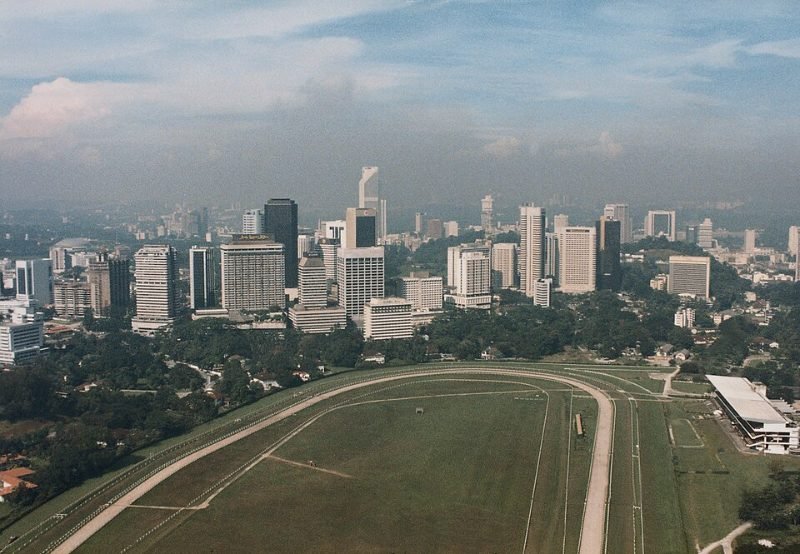
Understanding Persiaran KLCC & Jalan Pinang helps tenants and businesses budget with confidence. When comparing Persiaran KLCC & Jalan Pinang, always check whether figures are gross or net of service charges. Tracking Persiaran KLCC & Jalan Pinang over time makes it easier to time a renewal or relocation. Benchmarking Persiaran KLCC & Jalan Pinang across buildings keeps fit-out and headcount plans realistic. In short, Persiaran KLCC & Jalan Pinang reward tenants who do their homework before signing.
This guide covers Persiaran KLCC & Jalan Pinang: Inside KL’s Premium Core Micro-Market in the context of the Greater Kuala Lumpur office market, providing practical analysis for corporate occupiers, business owners and advisors making real estate decisions. The content reflects 2026 market conditions and current professional practice in Malaysia.
Quick Facts
- Topic: Persiaran KLCC & Jalan Pinang: Inside KL’s Premium Core Micro-Market
- Market Context: Greater KL, 2026
- Applicable to: Corporate occupiers, business owners, SMEs and MNCs making office-related decisions in Malaysia
- Current Market Condition: Tenant-favourable — prime vacancy ~22%, minimal new supply in 2026
Persiaran KLCC & Jalan Pinang: Inside KL’s Premium Core Micro-Market
Quick Answer: Persiaran KLCC and Jalan Pinang form the innermost ring of Kuala Lumpur’s office market — the towers that literally face KLCC Park and the Petronas Twin Towers. This micro-market commands the city’s top conventional rents, typically RM7.00–12.00+ psf per month in 2026 against a citywide prime average of RM6.12, and trades as much on park views, hotel adjacency and address weight as on specification.
There’s a moment in almost every premium office search when the client stops talking about floor plates and just looks out the window. It usually happens on Persiaran KLCC. The road that loops the park is where Kuala Lumpur keeps its most coveted office addresses — and if you’re researching Persiaran KLCC office space, you’re really researching a question of what an address is worth when the view from the boardroom is the city’s postcard.
This guide treats the micro-market with the specificity it deserves: which streets count, what the towers cost, who pays the premium and why, and how to negotiate in the one corner of KL where landlords genuinely believe their own brochures.
Defining the Micro-Market
The premium core is small — a few hundred metres of frontage where three elements converge: the park, the Petronas complex, and the five-star hotel belt. The streets that matter:
Persiaran KLCC — the park’s ring road, home to the Platinum Park precinct (Naza Tower and Menara Felda) and the towers with the head-on park-and-Twin-Towers views that define the market’s top end.
Jalan Pinang — the connecting spine between the park and the Raja Chulan ridge, carrying an established line of Grade A stock (the Etiqa Twins among the recognisable names) at slightly gentler pricing than the parkfront itself.
The Petronas complex — Tower 2 and Menara 3 Petronas, the micro-market’s ceiling, covered in our dedicated guide.
Attribute
| Detail | Value |
|---|---|
| Geography | The ring around KLCC Park: Persiaran KLCC, Jalan Pinang, the Petronas complex frontage |
| Character | KL’s highest-prestige conventional office addresses |
| Indicative rents | RM7.00 – 12.00+ psf/month (top floors and park views at the top) |
| Rail | KLCC LRT beneath Suria; Ampang Park interchange at the northern edge |
| Amenity | Suria KLCC, KLCC Park, the convention centre, the Mandarin Oriental/Four Seasons/Grand Hyatt hotel belt |
| Tenant DNA | Funds, private banks, energy majors, embassies’ commercial sections, premium professional firms |
What the Premium Core Costs in 2026
| Segment | Indicative Asking Range (RM psf/month) |
|---|---|
| Parkfront premium towers, high zones with views | 9.00 – 12.00+ |
| Premium core standard floors | 7.50 – 9.00 |
| Jalan Pinang established Grade A | 6.30 – 8.00 |
| Three observations make these numbers useful rather than just impressive. | |
The view premium is real and steep. Within a single tower, park-facing high-zone floors can ask 20–30% above identical city-facing space. If your business case doesn’t monetise the view (client perception, leadership recruitment, brand photography), buy the address and skip the premium — a city-facing floor in the same lobby carries the same letterhead.
Jalan Pinang is the micro-market’s value door. Established towers a hundred metres from the park deliver the postcode and the hotel belt at RM2–4 psf below the parkfront — the single most under-used arbitrage in premium KL leasing, in our experience.
The 2026 market reaches even here. Citywide prime vacancy of 22.1% and the gravitational pull of TRX mean premium-core landlords now negotiate properly: rent-free months, fitted suites, capped escalations. The asking-to-effective spread in this micro-market is wider than its mystique suggests — use it.
What You’re Actually Buying Here
Strip away the romance and the premium core sells four concrete things:
Client logistics at zero friction. Your visitors stay at the Mandarin Oriental or Four Seasons, walk to your lobby, and lunch at the hotel after. For businesses built on hosting capital — funds, private banking, premium advisory — the entire client journey happens within five hundred covered metres.
The address as due-diligence shorthand. Fair or not, a Persiaran KLCC letterhead answers a category of unasked questions in first meetings — about substance, permanence, seriousness. Firms raising capital or courting institutional mandates report it doing quiet work in every data room cover sheet.
Leadership recruitment. Senior hires weigh office address more than HR surveys admit. The park run at lunch, the hotel gym memberships, the school-run-friendly prestige — the core recruits executives the way Bangsar South recruits engineers.
The park itself. KL’s best green space at the doorstep is a daily amenity no other submarket can copy. Tenants mention it more in year two than in the leasing tour.
What it doesn’t sell: plate scale (mostly mid-sized floors — large consolidations belong in TRX), and cost rationality for back-office functions, which simply shouldn’t be here.
What Tenants Tell Us a Year After Moving In
The premium core’s twelve-month feedback has a particular signature: tenants stop justifying the rent and start describing it as infrastructure. A fund manager told us the office “closed two mandates before anyone sat down” — his shorthand for what the address and arrival experience do to institutional visitors. A professional firm reported partner recruitment conversations shortening noticeably; candidates had already imagined themselves in the building.
The grumbles are the predictable taxes of the postcode: parking scarcity (structural — negotiate allocations hard and early), tourist-season congestion around Suria, and the gentle daily expense of a neighbourhood where every lunch option knows its worth. Staff below leadership level are more neutral on the address than the leasing narrative assumes — which is why several tenants here run hub-and-spoke structures, keeping client-facing functions on the park and scaled teams in KL Sentral or Bangsar South. (That model, mapped.)
And one pattern unique to this micro-market: tenants almost never leave for cheaper — they leave for TRX or they don’t leave at all. The core’s competitive set is one district, and the renewal negotiations now openly price against it.
Negotiating in the Premium Core: Five Rules
1. Price the view separately. Get quotes for park-facing and city-facing floors in the same tower; decide whether the spread buys anything your business monetises.
2. Shop Jalan Pinang against the parkfront. Even if you end up on the park, the comparison disciplines the negotiation.
3. Bring the TRX comparison openly. Premium-core landlords know exactly where their tenants’ alternatives sit; a credible TRX option is worth more than any haggling technique.
4. Lock parking in writing. Ratios, locations, season-pass pricing — the core’s scarcest commodity after park views.
5. Cap your renewal. This micro-market’s pricing power strengthens as the cycle tightens; 2026’s terms deserve protecting into 2029–2031.
A Worked Example: Pricing the Parkfront Premium Properly
Premium-core decisions deserve premium-core arithmetic, so here’s the calculation we run with clients weighing a parkfront floor against the alternatives — using a 10,000 sq ft requirement, the micro-market’s most common serious size.
Parkfront premium tower, park-view high zone at an effective RM10.00 psf: RM100,000 a month, RM1.2 million a year. Same tower, city-facing mid zone at RM8.00: RM960,000. Jalan Pinang established Grade A at RM7.00: RM840,000. Quality fringe alternative (say, Integra Tower) at RM7.50: RM900,000 — with a certification story the parkfront’s older premium stock can’t always match.
So the true cost of the view, against the same building’s other aspect, is about RM240,000 a year. The cost of the postcode, against the best fringe alternative, is roughly RM60,000–300,000 depending on which rungs you compare. Those are the two numbers that matter, and they answer different questions. The postcode premium is usually defensible for client-gravity businesses — it’s a marketing and recruitment expense that performs. The view premium is defensible far more rarely: if your boardroom hosts capital-raising meetings weekly, perhaps; if it hosts internal town halls, you’re buying your own staff a postcard for a quarter of a million ringgit a year.
The discipline this example enforces: get quotes across aspects and across the micro-market’s rungs before falling in love. Premium-core landlords are skilled at showing the park first; your job is to price what the park adds to your business, not to your afternoon.
Questions worth asking while touring: recent letting evidence by aspect (the view premium varies by tower — make them show it), the escalation structure (cap it; this micro-market’s pricing power is the city’s strongest), and parking allocation in writing (the core’s scarcest commodity, as we keep saying, because tenants keep learning it late).
Outlook
The premium core’s medium-term story is scarcity squared: no new parkfront land exists, the citywide pipeline is near-empty through 2027 (about 0.12 million sq ft completing in 2026, 0.27 million in 2027), and the flight-to-quality current keeps the top of the market firmest — Knight Frank’s data shows prime rents rising 1.3% in Q1 2026 with vacancy tightening to 22.1%. TRX is the only genuine competitive pressure, and it competes for a different tenant shape (scale) more than the core’s tenant shape (presence).
Translation: the parkfront isn’t getting cheaper, relatively or absolutely. Tenants who want this address in their next planning cycle should transact while the citywide numbers still argue their side.
Building Facilities Considerations
When evaluating buildings in the Greater KL market, the facilities criteria most consistently relevant to occupiers include: internet connectivity and power reliability, security and access control, end-of-trip facilities (showers, lockers, bicycle storage), F&B proximity, and parking provision. Grade A buildings generally meet high standards across these criteria — building-level verification remains advisable before signing.
Limitations and Caveats
- Data variability: Market benchmarks represent averages — specific buildings and transactions may vary significantly.
- Timing sensitivity: KL market conditions evolve — verify current data before final decisions.
- Multiple factors: No single metric captures the full picture — holistic evaluation across multiple factors produces better outcomes.
Who This Guide Is For
- Business owners and executives making office decisions for Malaysian operations
- Corporate real estate managers requiring current market context
- CFOs and finance directors reviewing occupancy cost and lease financial implications
- Advisors preparing analysis for clients with Malaysia office requirements
For official market and investment context, see MITI and MIDA. For practical leasing steps, read our guide on how to rent office space in KLCC, which complements this overview of Persiaran KLCC & Jalan Pinang.
Frequently Asked Questions
What is the most prestigious office address in Kuala Lumpur?The Persiaran KLCC ring around KLCC Park — including the Platinum Park precinct and the Petronas complex — is the consensus answer, commanding the city’s top conventional rents.
How much does office space cost on Persiaran KLCC?Roughly RM7.50–12.00+ psf per month in 2026, with park-view high zones at the top of the range; Jalan Pinang’s established towers offer the micro-market from about RM6.30.
Is the rent premium for KLCC Park views worth it?Only if your business monetises it — client perception, leadership recruitment, brand. City-facing floors in the same towers carry the same address at 20–30% less.
Which train stations serve Persiaran KLCC?The KLCC LRT beneath Suria KLCC, with the Ampang Park LRT/MRT interchange at the micro-market’s northern edge.
Can smaller firms afford the premium core?Yes, via two routes: Jalan Pinang’s gentler pricing, and fitted suites in established towers — plus serviced offices carrying the postcode for the smallest requirements.
The Bottom Line
The premium core is KL’s only office market where the product is partly intangible — and the intangible, for the right tenant, pays rent. Buy the address deliberately, price the view honestly, negotiate like it’s 2026 (because it is), and the park does the rest.
Want a current availability map of the Persiaran KLCC ring and Jalan Pinang? Enquire now — we track every premium-core suite, including the ones that never reach the portals.